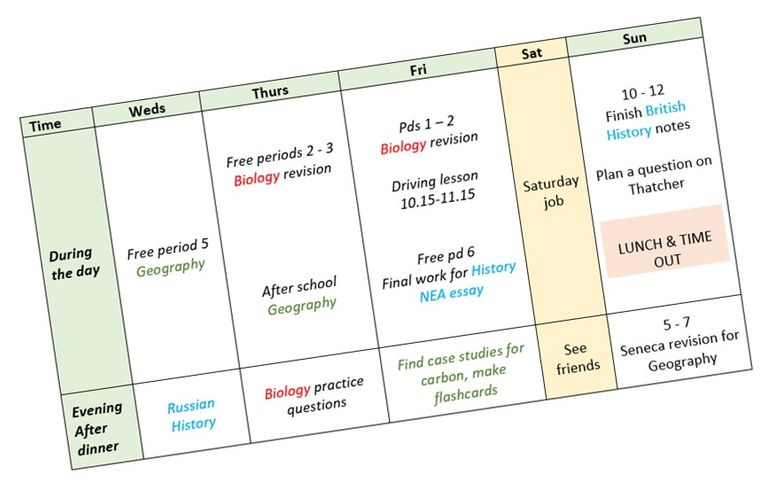
Revision timetables - top tips
1. Think about how much time time you actually have available for working - and when you work best.
2. You can't work all the time so you need to plan in rest breaks. A person's brain can usually cope with about 20 minutes of hard concentration before it starts to tire.
That doesn't mean get up and have a break every 20 minutes but it might mean you need to change the activity you are doing.
3. Plan using bigger blocks of time and then create activities within that. For example you might study History from 11-1 but within that time you might do a range of revision activities - not just sitting still at a desk making flashcards etc.

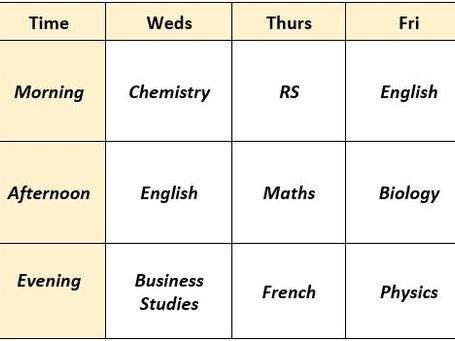

Revision timetables
Top tips
1. Think about how much time time you actually have available for working - and when you work best.
2. You can't work all the time so you need to plan in rest breaks. A person's brain can usually cope with about 20 minutes of hard concentration before it starts to tire. That doesn't mean get up and have a break every 20 minutes but it might mean you need to change the activity you are doing.
3. Plan using bigger blocks of time and then create activities within that. For example you might study History from 11-1 but within that time you might do a range of revision activities - not just sitting still at a desk making flashcards etc.