Revision tips and techniques
I don't know where to start so I just don't start...
You'd be surprised how common that is!
There's a lot of talk about revision, it can feel like a mountain to climb, you're at the base looking up at these huge files of work, sometimes you'll definitely feel it's easier to pick up your phone and click on snapchat or to play on your games console than it is to start revising - this is often because you just don't know where to start so you don't start.

Get organised
What do you already know and what do you need to know?

Should I make a revision timetable?
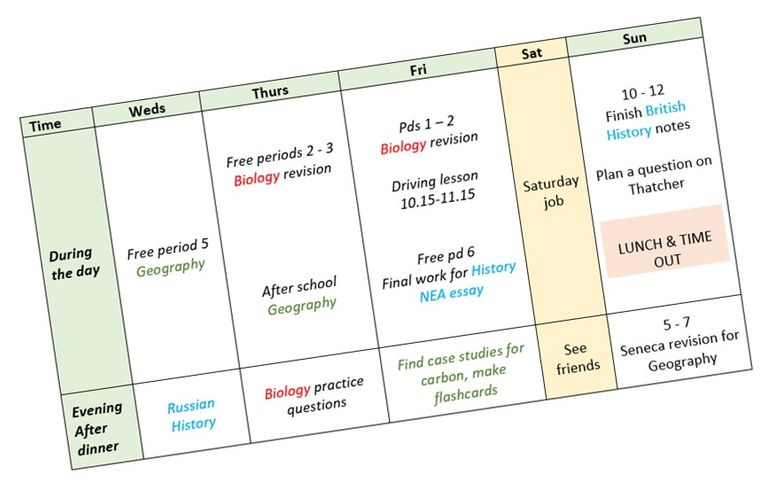
A timetable can be really helpful but it can also cause problems. If you make a really detailed plan that's unrealistic you'll find it impossible to achieve because you just can't stick to it - like you forgot to plan in toilet and dinner breaks or walking the dog etc etc - then you feel like you're failing before you even start.

How much revision do I need to do?
That depends on several factors:
- How much do you already know?
- How much time do you have?
- How tired are you - what time do you work best?

Good techniques to try
There are so many different methods for revision - the key thing is to find the way that works for you

I'm so stressed about all of this
if you feel overwhelmed the best thing you can do is tell someone - maybe a friend but, much better, an adult.
If not a parent then a teacher - they can help you talk things through.
Students often overthink situations and can become panicky but sharing that with other people can really help, there are also lots of web resources which can help you.

Help! I've left it too late...
Well, if it's the morning of the exam this may be true but if not, there's always time
Go and see your teacher and get some help prioritising the work - remember your teacher is an expert and they can help you very quickly.
Revision timetables
Top tips
1. Think about how much time time you actually have available for working - and when you work best.
2. You can't work all the time so you need to plan in rest breaks. A person's brain can usually cope with about 20 minutes of hard concentration before it starts to tire. That doesn't mean get up and have a break every 20 minutes but it might mean you need to change the activity you are doing.
3. Plan using bigger blocks of time and then create activities within that. For example you might study History from 11-1 but within that time you might do a range of revision activities - not just sitting still at a desk making flashcards etc.